Your staked ether ETF redeems in a day. The exit queue does not.
BlackRock's staked ether fund keeps 5% to 30% of its ether unstaked to meet redemptions. Behind that sleeve is a validator exit queue shared by the whole network, which hit 46 days in September 2025 because one operator got cautious.

There are now more than a hundred crypto ETFs competing for the same money, and the ones drawing attention this year are the staked ether funds, because they pay something. BlackRock's iShares Staked Ethereum Trust, ticker ETHB, launched in March and took in $254 million in its first week. Grayscale has been staking since October 2025. The pitch is simple enough: you get ether exposure in a brokerage account, and you get roughly 2% a year on top.
I went looking for how the redemption actually works, because that's the part of any wrapper that decides whether it survives a bad week. What I found is a promise about a queue, and the queue has a history worth reading.
What a staked ether ETF keeps back, and what sits behind it
BlackRock's filing says the fund intends to keep between 70% and 95% of its ether staked. The rest, 5% to 30%, sits unstaked as what the filing calls a liquidity sleeve, and that sleeve is what meets day to day redemptions.
Inside the sleeve, everything works. A redemption arrives, ether goes out, nobody waits. That design is sound for the ordinary case, and the ordinary case is almost every day.

What happens on the day the sleeve empties is the question. Then the fund has two ways to produce ether: unstake it, or buy it.
Unstaking means joining Ethereum's validator exit queue. Buying means going to the market at whatever price the market is asking, on a day when the reason the sleeve emptied is probably that everyone wants out at once.
Neither route is a failure of the product. Both are simply slower and more expensive than the thing the wrapper appears to promise, and they get slower and more expensive together.
The exit queue is not a number, it's a queue
This is the part that changes how I read the whole product.
Ethereum rate limits validator exits. The protocol processes a fixed churn of 256 ETH per epoch, which works out to roughly 57,600 ETH a day, and that capacity is shared by every staker on the network. It's not per fund and it doesn't scale with demand. It's a single door.
On 12 September 2025 that queue hit its record: 2.65 million ETH waiting, a 46 day wait to get out, about 4.5% of all staked ether sitting in line. In July 2026 the same queue was zero, with withdrawals settling immediately and 40.9 million ETH staked, about 34% of supply.
Same protocol, same mechanism, eleven months apart. Nothing in between forty-six days and nothing.
The record was not set by a market panic
What reframed this for me is the cause, and I haven't seen anyone connect it to the ETFs.
The queue had been building for weeks, on profit taking, on regulatory clarity, and on ETF demand for ether pulling in the other direction. What took it to the record was none of those. On 9 September the staking provider Kiln exited all of its validators as a precaution, after two unrelated security incidents, the NPM supply chain attack and the SwissBorg breach. That single decision added roughly 1.6 million ETH, about $7 billion at the time, in one go, and it took the network a month and a half to clear.
So the largest single input to the worst exit congestion in Ethereum's history was an operator being careful. Nothing about it was a market event. Which means an ETF's redemption capacity can be consumed by something that shows up nowhere in a market risk model, because the model is watching prices and flows and the thing that took the queue to a record was a security decision at a company most holders have never heard of.
It also means the two can coincide. There's no mechanism keeping them apart. A security scare that empties the queue capacity in week one and a drawdown that empties the liquidity sleeve in week two is not a stretch. It is two ordinary events landing in an unlucky order.
The disclosure is honest. The pricing is the problem
I want to be fair to the issuers here, because the filings are not hiding this.
BlackRock's prospectus spells out the mechanics: an exit delay, then a withdrawability delay of about 27 hours, then a withdrawal sweep that takes roughly 7 to 10 days. It says that if the buffer depletes during heavy redemptions the fund may pay cash in lieu, and may use delayed settlement for in-kind redemptions in stressed conditions. As of 5 February 2026 the filing cited about 4 million ETH in the activation queue with an estimated 70 day wait, which is the same congestion problem pointed the other way.
The promise is one day. The queue behind it has been forty-six.
Each step between an investor redeeming and a staked ether ETF producing ether, in days
Redemption settlement, what the wrapper promises
Withdrawability delay, fixed by the protocol
Withdrawal sweep, as stated in the BlackRock filing
Exit queue, at its record on 12 September 2025
The first three steps are always there. The fourth is zero on a calm day and was forty-six days when one operator exited its validators at once. Sources: BlackRock ETHB filing, Figment, Ethereum protocol churn limit.
CryptoSlate made this argument in February, and made it well: staking inserts a liquidity clock into the mechanism that's supposed to keep an ETF's market price aligned with its holdings. That's the right frame and I'm not going to pretend I got there first.
What I'd add is where the pressure goes when that clock runs slow. An ETF stays near its net asset value because authorised participants arbitrage the gap, and that arbitrage assumes redemption is quick and certain. Make redemption slow and conditional and the arbitrage weakens, and the release valve is the share price. The fund trades at a discount.
Which is a familiar shape. On 13 June 2022, stETH traded at 0.9458 against ether, after Celsius and Alameda pulled liquidity out of the pool. That discount was the market pricing the difficulty of getting out. The staked ETF has rebuilt the same exposure with better disclosure, a regulator in the room and a ticker, and the discount would arrive for the same underlying reason: the exit is narrower than the entrance.
What this looks like from inside an engineering team
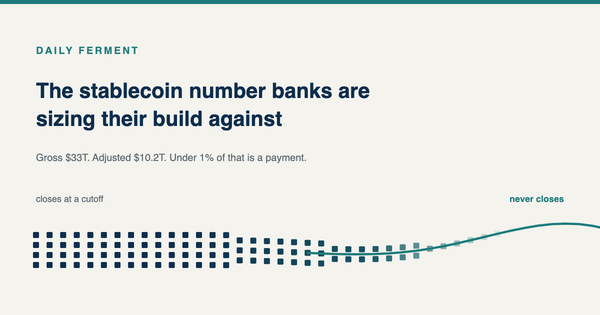
I have built settlement and payment monitoring on chains, and the recurring hard problem was never throughput. It was that "what is true right now" and "what can be settled right now" are two different questions, and systems that conflate them fail quietly. I wrote about the same split when banks size a stablecoin build against the wrong number.
But the closer match is something I've done wrong myself, and it has nothing to do with crypto.
Every capacity plan I've written was sized against a queue I measured while the system was healthy. Job queue depth, deploy pipeline throughput, support ticket backlog, the number of people who can actually run an incident at 3am. You measure, you see the queue is short, you size for a bit more than that, you ship.
And the queue's depth while nothing is wrong tells you almost nothing about its depth during the event that makes you need it, because the event is usually what fills it. The on-call rotation that handles one incident comfortably is not a rotation that handles two, and it will look completely adequate in every week where there's only one.
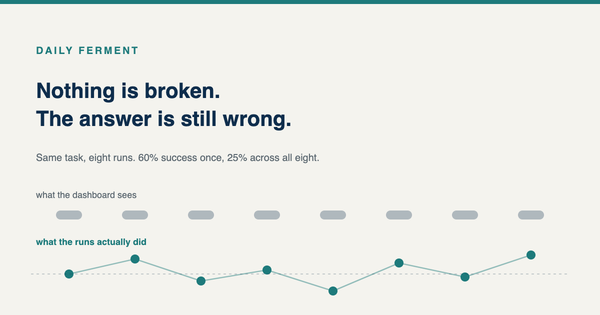
The claim I'll defend: a queue measured while nothing is wrong reports its depth on a calm day and nothing else. The thing that fills it is usually the same thing that makes you need it, so the two move together and measuring either one alone throws away what you were trying to learn.
Both rooms reach for a bigger buffer. Bigger sleeve, more on-call engineers, deeper backlog headroom. That helps, and it's the wrong shape of answer, because a buffer is sized in units of the thing you're buffering while the failure arrives in units of time. What you actually need is a measurement of the drain rate under load, and almost nobody has one, because getting it means either waiting for a bad day or deliberately causing one.
Chaos engineering exists for exactly this reason, and it's telling that finance has no equivalent. Nobody runs a redemption drill. It is the same gap I found in AI observability, which measures whether anything broke rather than whether the thing is consistent.
A timeline of how these products got built
The staked ETF didn't arrive in one decision. It's the result of four separate regulatory and market changes stacking up over about a year, and reading them in order makes the current design look much less like a choice and much more like a consequence.
29 July 2025. The SEC permits in-kind creations and redemptions for crypto ETPs, which had previously been cash only. Authorised participants can now deliver and receive the actual asset. Efficient, cheaper, and it makes the fund's obligation to produce real ether explicit rather than abstract.
9 to 12 September 2025. One operator's precautionary exit drives the validator exit queue to a record 46 days and 2.65 million ETH.
September 2025. The SEC approves generic listing standards for crypto ETPs, cutting approval timelines from up to 240 days to as little as 75. This is the change that turned a trickle of products into a flood.
6 October 2025. Grayscale activates staking on its ether fund, the first of the US products to do it.
December 2025. BlackRock files for a staked ether ETF. WisdomTree lists a fully staked ether ETP in Europe, built on Lido's stETH rather than on direct validator exits, which is the other way to solve the same problem and swaps queue risk for secondary market depth risk.
12 March 2026. iShares Staked Ethereum Trust begins trading, staking 70% to 95%, keeping a 5% to 30% sleeve, retaining 18% of staking rewards.
July 2026. The exit queue clears to zero while 2.5 million ETH waits to get in, a 44 day entry wait. The congestion has completely reversed direction.
Where all of this stands this month
Three things happened recently that bear on the argument, and one of them cuts against it.
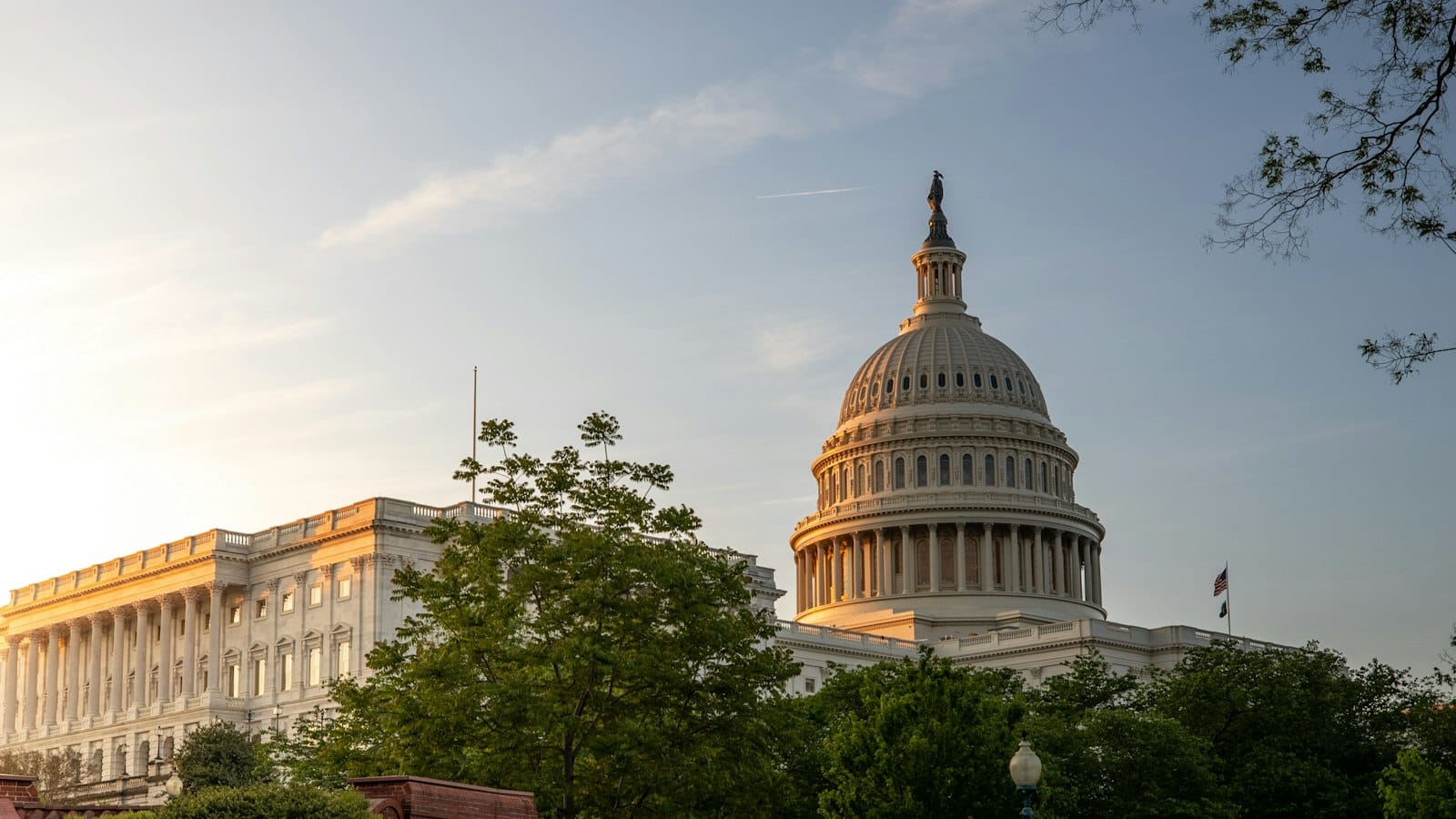
On 15 September the CLARITY Act failed a Senate cloture vote, 49 to 50, well short of the 60 it needed. The bill ran to over 600 pages and would have set out which agency regulates what in crypto spot markets, with new authority for the CFTC.
It collapsed over ethics provisions covering officials' crypto holdings, with the midterms close enough to make compromise unattractive. Bitcoin slid from close to $80,000 on the news.
For these products that means the rules stay with the regulators rather than in statute, and SEC Chair Paul Atkins has himself said guidance without legislation lacks durability.
Flows, meanwhile, have been fine. Ether ETF assets reached roughly $15.6 billion at the end of August, on an eleven day run of net inflows. Solana and XRP products each entered September near $1.5 billion. Bitcoin funds took over $3 billion in August. None of this looks like stress, which is exactly the condition under which a liquidity sleeve looks generous.
And the point against my argument: the queue has now been empty for months, through a period that included a failed market structure bill and a sharp price move. That is real evidence that exit capacity is not currently binding. I take it seriously. It just doesn't tell you much about the day it binds, which is the whole difficulty.
Marking my confidence
Established. The churn limit of 256 ETH per epoch and the roughly 57,600 ETH daily exit capacity are protocol facts. The September 2025 record of 46 days and 2.65 million ETH, and its cause, are as Figment reported at the time. BlackRock's 70% to 95% staking target, the 5% to 30% liquidity sleeve, the 18% reward retention, the 27 hour withdrawability delay and the 7 to 10 day sweep are from the filing. The in-kind approval date and the generic listing standards are on the record. The June 2022 stETH level of 0.9458 is as reported.
Not original. The observation that staking introduces a liquidity clock into the ETF arbitrage mechanism was published by CryptoSlate in February 2026, before this piece. The risk factors themselves are disclosed by the issuers. Cointribune noted in September 2025 that ETF and treasury demand was adding to exit queue pressure, which is this argument pointed the other way round.
Inferred. That the September 2025 congestion and a redemption wave could coincide, and that the discount is where the pressure would surface. Both follow from the mechanics but neither has happened yet, and a first instance would teach more than the reasoning does.
Guess. That within two years at least one staked crypto ETP trades at a visible discount to net asset value for more than a week, and that the post-mortem names queue congestion rather than credit or custody. I would not bet heavily on the timing.
One caution about my own sources. Much of the writing on ETF staking mechanics comes from staking providers and issuers, who are describing a product they sell. I have tried to lean on protocol facts and filings, and to name the interest when I could not.
What would change my mind: a stress episode where a fully staked product meets large redemptions without a discount, or a credible mechanism I've missed that gives ETFs priority access to exit capacity.
What I would actually check
If you hold one of these, the number worth knowing is not the yield. It's the current unstaked percentage, which funds disclose, next to the current exit queue depth, which the network publishes. The ratio between them is your real redemption position, and it moves every day.
And if you run engineering rather than a fund, the transferable question is the same one: which of your queues have you only ever measured on a good day?