Sodium batteries are signing deals before they're cheaper. Chile's saltpeter lost the same way.
Wood Mackenzie says sodium-ion cells match LFP on cost by late 2026, systems only after 2030. Over 70 GWh is signed anyway. Chile lost its nitrate market the same way.
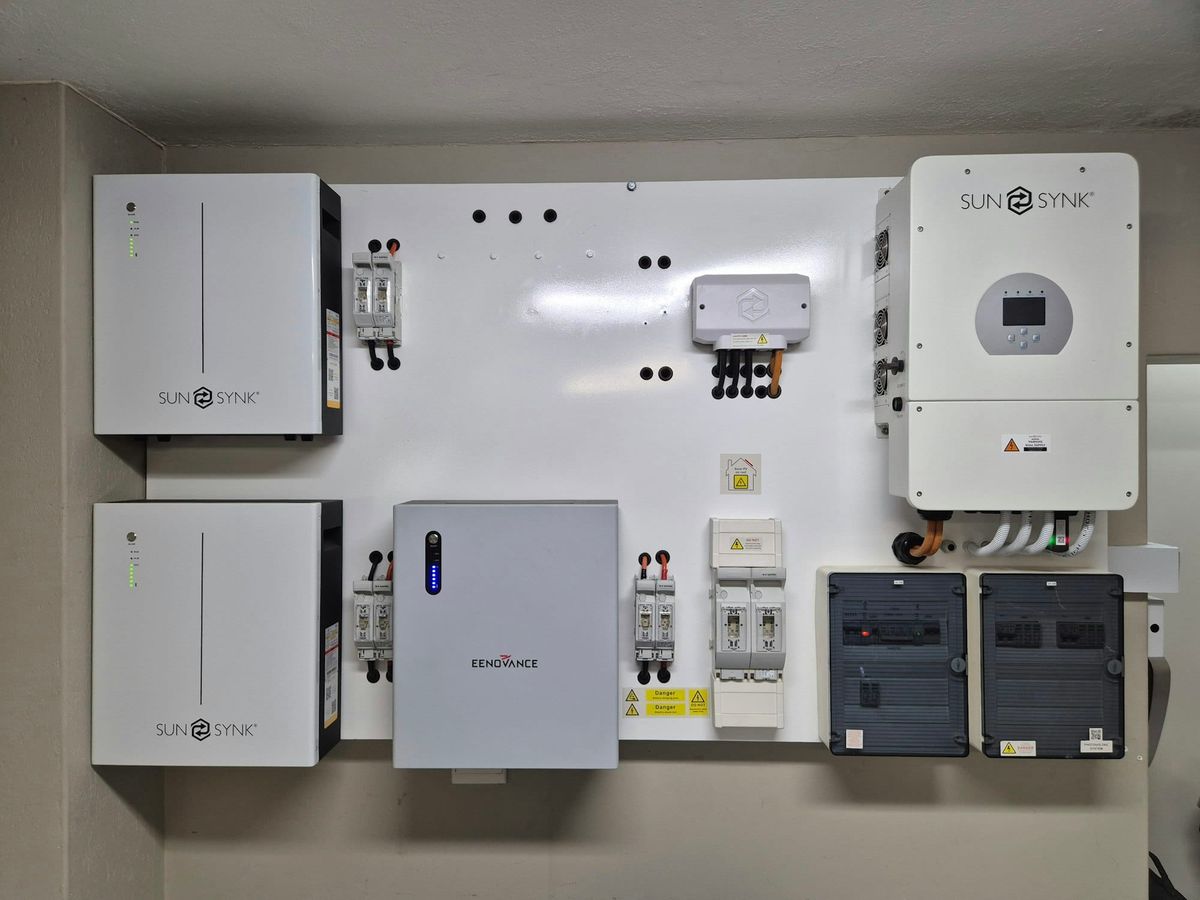
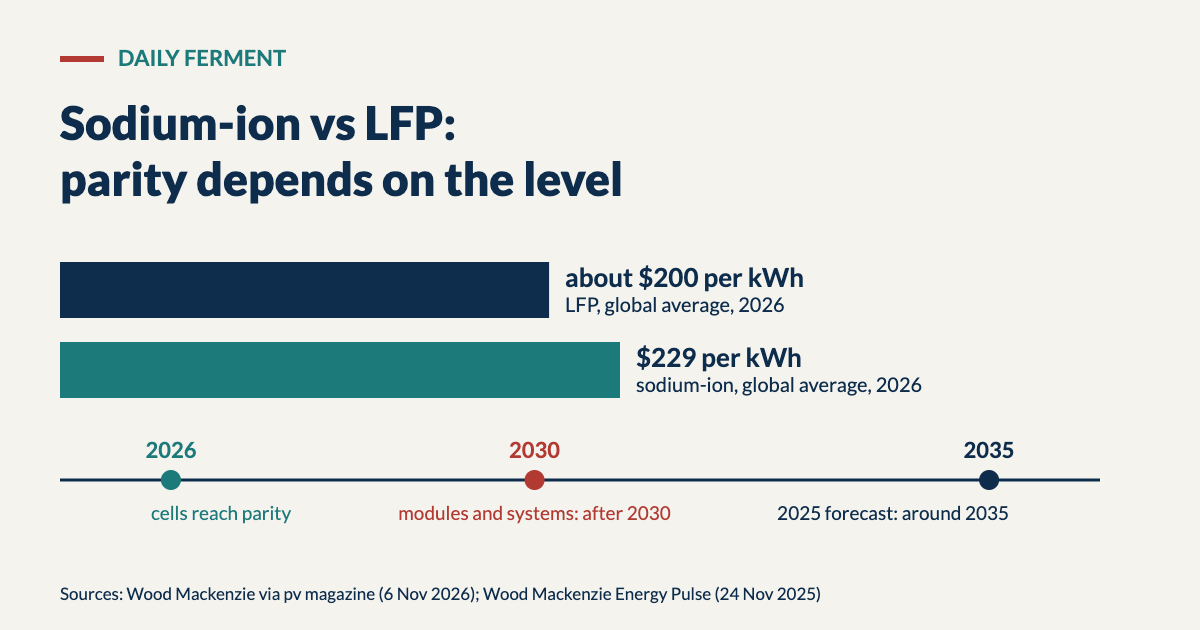
On 6 November 2026 pv magazine reported a Wood Mackenzie analysis: the leading sodium-ion battery makers should match lithium iron phosphate (LFP) batteries on cost at the cell level by late 2026, but not at the module or system level until after 2030. So is sodium-ion cheaper than LFP yet? Not where most buyers pay. The global average Wood Mackenzie gives is $229 per kWh for sodium-ion against about $200 for LFP. Yet buyers have already signed supply agreements for more than 70 GWh. I think they're buying for the reason synthetic nitrogen beat Chilean saltpeter a century ago: supply, not price.
What did Wood Mackenzie find?
The study covered China, the United States, Germany and India, and picked sodium-ion as the most promising alternative to lithium-based batteries for stationary storage, the big battery parks that sit beside solar farms and substations. China leads. BYD plans 30 GWh of sodium-ion manufacturing capacity, and CATL aims to ship more than 1 GWh by the end of 2026. Wood Mackenzie puts the learning rate in China at 18% to 20% for 2026 to 2035, meaning costs fall by about that much each time cumulative output doubles, and it says planned factories already exceed demand.
The catch is in the upfront price. Sodium-ion costs more today. Wood Mackenzie's argument for it is total cost of ownership: about 21% lower over a 20-year project, because a project doesn't need to add capacity partway through its life, and it costs less to run. For projects being built now, the same report says LFP "remains the most commercially mature option" for two to four hours of storage.
Sources: Wood Mackenzie analysis reported by pv magazine, 6 Nov 2026.
My first reaction: did the forecast just move nine years?
When I read "parity by late 2026" I remembered a different date. In November 2025, Wood Mackenzie's own Energy Pulse put the 2025 average at $52 per kWh for LFP and $59 for sodium-ion, and said "we do not expect them to reach parity with LFP until around 2035." A forecast that moves nine years in twelve months would be news in itself.
Checking, I don't think it moved that much. The two pairs of numbers can't be measuring the same thing: $52 and $59 one year, $229 and $200 the next. The gap is about the same in both, sodium about 13% to 15% dearer. What changed is which level the headline talks about. Cells, the bare units, reach parity first. Modules and full systems, which is what a storage project buys, come after 2030. "Around 2035" and "late 2026" can both be right if they're answering different questions. Neither article says which level each price is, so this part is my inference.
Guess first: in 2025, what share of the world's battery production for cars and storage was sodium-ion?
Under 1%. China made about 80% of the world's lithium-ion batteries; sodium-ion was a rounding error beside them. Source: Wood Mackenzie, 24 Nov 2025.
So why sign 70 GWh before it's cheaper?
Because the rules and the supply chain push buyers toward it. In July 2026 China brought back a consumption tax on lithium-ion batteries and exempted sodium-ion until the end of 2028; LFP pays 2% from September 2026, rising to 4% in September 2027. The United States puts tariffs of about 58% on storage cells imported from China and pays production credits for batteries made at home. The EU wants carbon footprint declarations under its Battery Regulation. India has a $1.25 billion incentive programme.
Under that sits a supply chain with one dominant country. China makes about 80% of the world's lithium-ion batteries, about 64% of the refined lithium and almost 90% of the cathode materials, per Wood Mackenzie's 2025 piece. Sodium, the sixth most common element in the Earth's crust, is about 1,000 times more abundant than lithium. China dominates sodium-ion manufacturing too, but the raw material can come from almost anywhere. That is why the same piece describes sodium-ion as a hedge against supply disruption and cost inflation.
What happened to Chile's saltpeter?
Before synthetic fertiliser, most of the world's nitrogen was dug out of the ground. In the 1890s Chile supplied almost four fifths of the nitrogen used anywhere, mined as saltpeter in the Atacama Desert, according to Manuel Bastias Saavedra's entry on nitrate in the International Encyclopedia of the First World War. In 1913 Fritz Haber's ammonia process existed, but it wasn't yet cost-efficient, and Chile still produced over half the world's nitrogen. Germany was Chile's biggest customer, taking 32.9% of its nitrate exports that year.
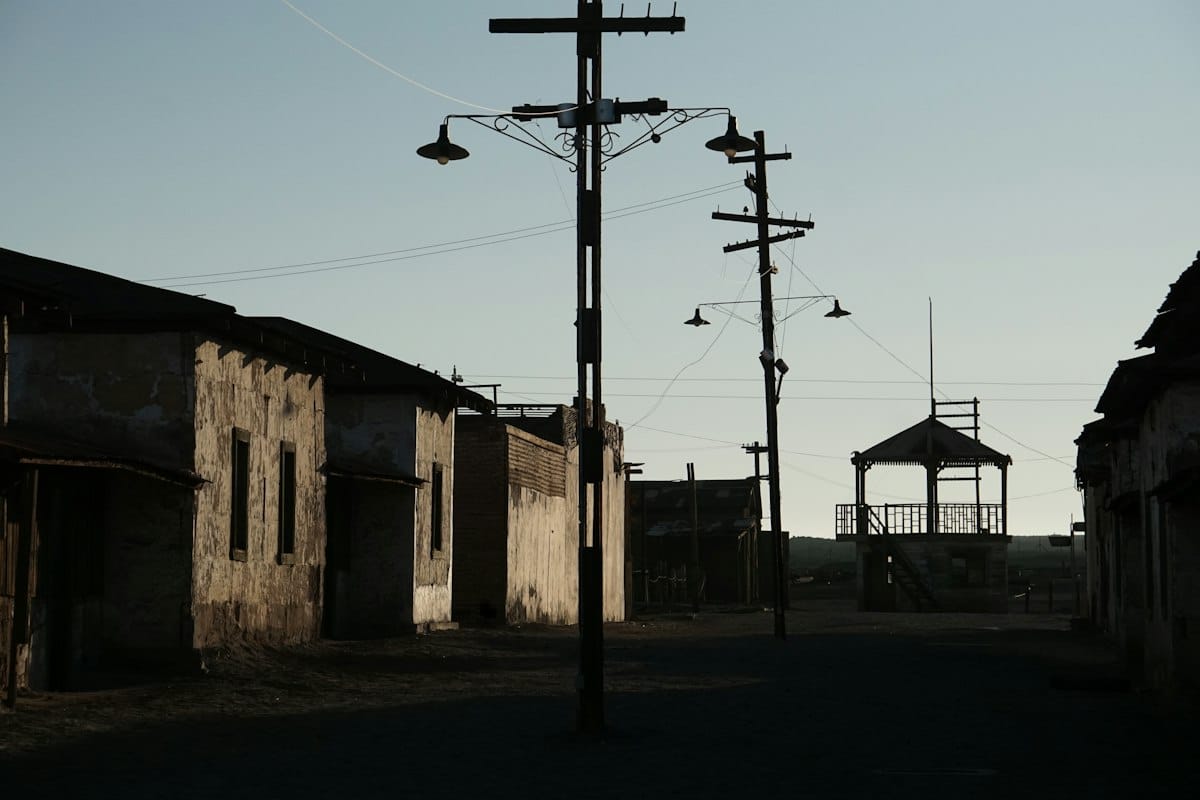
Chile's saltpeter came from the Atacama Desert, where the dry climate let nitrate deposits form on a scale found almost nowhere else.
Chile took those deposits from Peru and Bolivia in the War of the Pacific, 1879 to 1883, and by the 1890s it supplied almost four fifths of the world's nitrogen.
None of that protected it once its biggest customer had a reason to make its own.
Then the war and the British blockade cut Germany off. Its share went to zero in 1915 and stayed there. Germany didn't switch to synthetic nitrogen because it had become cheaper. It switched because it had no other supply, and the encyclopedia says that exclusion "accelerated the industrial production of synthetic nitrate". Chile's exports peaked in 1916, near 3 million tons, feeding other armies. After the war, synthetic nitrates displaced Chilean saltpeter as the main source of nitrogen.
The part that stays with me is the order of events. The substitute didn't win on price and then take the market. It was built because of a supply shock, it scaled because the builder had no choice, and the price advantage came after the factories existed. Meanwhile the incumbent had its best year in the middle of the switch.
Synthetic nitrogen, 1913 to 1918
- Incumbent Chilean saltpeter, over half the world's nitrogen in 1913
- Substitute at the start the Haber process, not yet cost-efficient
- What pushed buyers the blockade: Germany's share of Chile's exports fell from 32.9% to zero
- Incumbent's best year 1916, near 3 million tons, during the switch
- Outcome synthetic nitrates displaced saltpeter after the war
Sodium-ion batteries, 2025 to 2026
- Incumbent LFP; China makes about 80% of lithium-ion batteries
- Substitute now about 15% dearer: $229 against about $200 per kWh
- What pushes buyers China's tax exemption, US tariffs of about 58%, supply risk
- Parity cells late 2026, systems after 2030
- Outcome not known; LFP is still the mature choice for 2 to 4 hours
Sources: Bastias Saavedra, 1914-1918-online, 2014; pv magazine, 6 Nov 2026; Wood Mackenzie, 2025.
Does that mean lithium is in trouble?
Not in any way I can show. Sodium-ion was under 1% of battery production for cars and storage in 2025, Wood Mackenzie said. Lithium is also getting cheaper: prices fell 24% in 2025, the USGS says, which makes the substitute harder to justify on price alone. And the Atacama shows up again here. Chile and Argentina supplied 54% and 43% of US lithium imports from 2021 to 2024.
What I'd take from the nitrate story is narrower. If you sell the incumbent material, the parity date in a forecast is the wrong thing to watch. The things to watch are a tax exemption, a tariff, an export rule, a buyer who decides it can't depend on one country. Those come first, and they decide where the new factories go. I wrote about the same pull in China's curbs on exporting solar know-how, where the rule, not the price, set the direction. The question of whether a target still steers behaviour once it looks out of reach came up in the 1.5°C overshoot piece, and it applies to parity dates too.
- Established
- The Wood Mackenzie figures as pv magazine reported them on 6 November 2026, and in Wood Mackenzie's own November 2025 piece. The tax, tariff and incentive measures listed. The nitrate history in the 1914-1918-online encyclopedia. The USGS lithium figures.
- Inferred
- That the two pairs of Wood Mackenzie prices measure different levels (cells against systems). That the 70 GWh is being signed more for supply risk and policy than for price. That the nitrate pattern fits this case.
- Still a guess
- That sodium-ion follows the nitrate path at all. It may stay a niche for cold climates and long-life storage.
A substitute raw material usually wins on supply risk before it wins on price, so the date to watch is the policy change, not the parity date.
More on Daily Ferment: China's solar curbs ban know-how. Britain banned workers. and When petrol cars become the minority, who pays?
Sources
- pv magazine, Sodium-ion batteries approach cost parity with LFP, with 70 GWh covered by supply agreements, 6 Nov 2026
- Wood Mackenzie, Ed Crooks, Sodium-ion batteries enter energy storage market, 24 Nov 2025
- Manuel Bastias Saavedra, Nitrate, 1914-1918-online International Encyclopedia of the First World War, 8 Oct 2014
- USGS, Mineral Commodity Summaries 2026